
|
|
SEQUENCEName:
Specifically, you specify a start value, an increment, and a stop value. You can also optionally specify a repeat factor (this defaults to 1 if not specified). The 2010/11 version of Dataplot updated this command to support variable arguments for the start, increment, stop, and repeat factors. If more than one of these is a variable (as oppossed to a constant/parameter), then these variable must have the same length. If a variable is used for one or more of the arguments, then we essentially create k separate sequences (where k is the number of elements in the variable) and append the results together. Arguments that are entered as constants or parameters will use the same value for each sequence. In addition, a new syntax was added where the first argument is a list of values and the second argument is the number of times that each value is repeated. This syntax is useful when you want to generate a simple sequence with repeat values where the number of repeats is variable. See the Note section below for some examples of using this new syntax.
where <start> is a constant, parameter, or variable that specifies the beginning value for the sequence; <inc> is a constant, parameter, or variable that specifies the increment value of the sequence; <stop> is a constant, parameter, or variable that specifies the ending value of the sequence; and <resp> is a variable where the generated sequence is saved. This is the most common syntax for this command.
FOR I = <start2> <inc2> <stop2> where <start> is a constant, parameter, or variable that specifies the beginning value for the sequence; <inc> is a constant, parameter, or variable that specifies the increment value of the sequence; <stop> is a constant, parameter, or variable that specifies the ending value of the sequence; <start2> is a number or parameter that identifies the first row of <resp> in which the sequence is saved (typically it has a value of 1); <inc2> is a number or parameter that identifies the row increment of <resp> in which the sequence is saved (typically it has a value of 1); <stop2> is a number or parameter that identifies the last row of <resp> in which the sequence is saved; and <resp> is a variable where the generated sequence is saved.
This syntax is similar to syntax 1 except that the generated
sequence is repeated until the rows of
where <start> is a constant, parameter, or variable that specifies the beginning value for the sequence; <repeat> is a constant, parameter, or variable that specifies the number of times each value in the sequence is repeated; <inc> is a constant, parameter, or variable that specifies the increment value of the sequence; <stop> is a constant, parameter, or variable that specifies the ending value of the sequence; and <resp> is a variable where the generated sequence is saved. This syntax is useful for generating sequence like 1 1 1 2 2 2 3 3 3 4 4 4.
FOR I = <start2> <inc2> <stop2> where <start> is a constant, parameter, or variable that specifies the beginning value for the sequence; <repeat> is a constant, parameter, or variable that specifies the number of times each value in the sequence is repeated; <inc> is a constant, parameter, or variable that specifies the increment value of the sequence; <stop> is a constant, parameter, or variable that specifies the ending value of the sequence; <start2> is a number or parameter that identifies the first row of <resp> in which the sequence is saved (typically it has a value of 1); <inc2> is a number or parameter that identifies the row increment of <resp> in which the sequence is saved (typically it has a value of 1); <stop2> is a number or parameter that identifies the last row of <resp> in which the sequence is saved; and <resp> is a variable where the generated sequence is saved.
This syntax is similar to syntax 3 except that the generated
sequence is repeated until the rows of
where <values> is a constant, parameter, or variable that specifies the values for the sequence; <repeat> is a constant, parameter, or variable that specifies the number of times each value in <values> is repeated; and <resp> is a variable where the generated sequence is saved. This syntax is useful when the number of repeated values varies. For example, you can do something like
LET REP = DATA 3 3 2 4 4
LET X = SEQUENCE 1 1 10 FOR I = 1 1 100 LET X = SEQUENCE -4 9 1 4 LET X = SEQUENCE 1 50 1 2 FOR I = 1 1 100
you can enter the commands
LET STOP = DATA 5 33 67 LET Y = SEQUENCE START 1 STOP To generate the sequence
you can enter the command
LET REP = DATA 3 2 4 5 LET Y = SEQUENCE VAL REP Additional examples of using the variables with the SEQUENCE command are given in the Program section below.
2010/11: Added support for variables as arguments 2010/11: Added support for Syntax 5
LET X = SEQUENCE -4 1 4 FOR I = 1 1 81
LET Y = SEQUENCE -4 9 1 4
LET Z = X**2+Y**2-X*Y
LET Z0 = SEQUENCE 5 5 40
CONTOUR PLOT Z X Y Z0
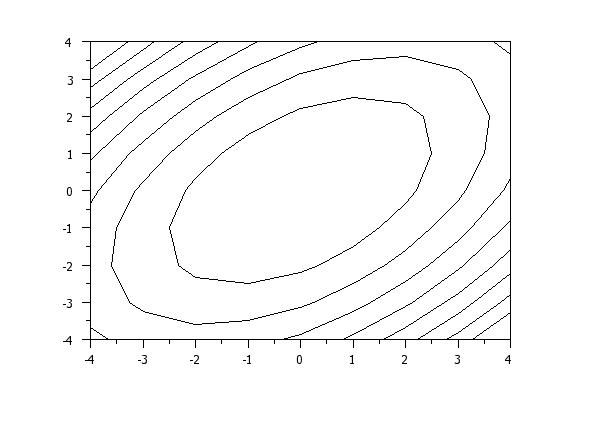 Program 2:
set write decimals 1
.
. Step 1: First test basic current usage
.
let y = sequence 1 1 10
print y
---------------
Y
---------------
1.0
2.0
3.0
4.0
5.0
6.0
7.0
8.0
9.0
10.0
pause
delete y
.
let y = sequence 1 3 1 10
print y
---------------
Y
---------------
1.0
1.0
1.0
2.0
2.0
2.0
3.0
3.0
3.0
4.0
4.0
4.0
5.0
5.0
5.0
6.0
6.0
6.0
7.0
7.0
7.0
8.0
8.0
8.0
9.0
9.0
9.0
10.0
10.0
10.0
pause
delete y
.
. Step 2: Now test "variable" syntax
.
let rep = data 1 2 3 1 2 3 1 2 3 1
let y = sequence 1 rep 1 10
print y
---------------
Y
---------------
1.0
2.0
3.0
4.0
5.0
6.0
7.0
8.0
9.0
10.0
1.0
1.0
2.0
2.0
3.0
3.0
4.0
4.0
5.0
5.0
6.0
6.0
7.0
7.0
8.0
8.0
9.0
9.0
10.0
10.0
1.0
1.0
1.0
2.0
2.0
2.0
3.0
3.0
3.0
4.0
4.0
4.0
5.0
5.0
5.0
6.0
6.0
6.0
7.0
7.0
7.0
8.0
8.0
8.0
9.0
9.0
9.0
10.0
10.0
10.0
1.0
2.0
3.0
4.0
5.0
6.0
7.0
8.0
9.0
10.0
1.0
1.0
2.0
2.0
3.0
3.0
4.0
4.0
5.0
5.0
6.0
6.0
7.0
7.0
8.0
8.0
9.0
9.0
10.0
10.0
1.0
1.0
1.0
2.0
2.0
2.0
3.0
3.0
3.0
4.0
4.0
4.0
5.0
5.0
5.0
6.0
6.0
6.0
7.0
7.0
7.0
8.0
8.0
8.0
9.0
9.0
9.0
10.0
10.0
10.0
1.0
2.0
3.0
4.0
5.0
6.0
7.0
8.0
9.0
10.0
1.0
1.0
2.0
2.0
3.0
3.0
4.0
4.0
5.0
5.0
6.0
6.0
7.0
7.0
8.0
8.0
9.0
9.0
10.0
10.0
1.0
1.0
1.0
2.0
2.0
2.0
3.0
3.0
3.0
4.0
4.0
4.0
5.0
5.0
5.0
6.0
6.0
6.0
7.0
7.0
7.0
8.0
8.0
8.0
9.0
9.0
9.0
10.0
10.0
10.0
1.0
2.0
3.0
4.0
5.0
6.0
7.0
8.0
9.0
10.0
pause
delete y rep
.
let stop = sequence 10 1 1
let y = sequence 1 2 1 stop
print y
---------------
Y
---------------
1.0
1.0
2.0
2.0
3.0
3.0
4.0
4.0
5.0
5.0
6.0
6.0
7.0
7.0
8.0
8.0
9.0
9.0
10.0
10.0
1.0
1.0
2.0
2.0
3.0
3.0
4.0
4.0
5.0
5.0
6.0
6.0
7.0
7.0
8.0
8.0
9.0
9.0
1.0
1.0
2.0
2.0
3.0
3.0
4.0
4.0
5.0
5.0
6.0
6.0
7.0
7.0
8.0
8.0
1.0
1.0
2.0
2.0
3.0
3.0
4.0
4.0
5.0
5.0
6.0
6.0
7.0
7.0
1.0
1.0
2.0
2.0
3.0
3.0
4.0
4.0
5.0
5.0
6.0
6.0
1.0
1.0
2.0
2.0
3.0
3.0
4.0
4.0
5.0
5.0
1.0
1.0
2.0
2.0
3.0
3.0
4.0
4.0
1.0
1.0
2.0
2.0
3.0
3.0
1.0
1.0
2.0
2.0
1.0
1.0
pause
delete y stop
.
let start = data 1 100 1000
let inc = data 1 10 100
let stop = data 10 1000 10000
let rep = data 3 2 1
let y = sequence start rep inc stop
print y
---------------
Y
---------------
1.0
1.0
1.0
2.0
2.0
2.0
3.0
3.0
3.0
4.0
4.0
4.0
5.0
5.0
5.0
6.0
6.0
6.0
7.0
7.0
7.0
8.0
8.0
8.0
9.0
9.0
9.0
10.0
10.0
10.0
100.0
100.0
110.0
110.0
120.0
120.0
130.0
130.0
140.0
140.0
150.0
150.0
160.0
160.0
170.0
170.0
180.0
180.0
190.0
190.0
200.0
200.0
210.0
210.0
220.0
220.0
230.0
230.0
240.0
240.0
250.0
250.0
260.0
260.0
270.0
270.0
280.0
280.0
290.0
290.0
300.0
300.0
310.0
310.0
320.0
320.0
330.0
330.0
340.0
340.0
350.0
350.0
360.0
360.0
370.0
370.0
380.0
380.0
390.0
390.0
400.0
400.0
410.0
410.0
420.0
420.0
430.0
430.0
440.0
440.0
450.0
450.0
460.0
460.0
470.0
470.0
480.0
480.0
490.0
490.0
500.0
500.0
510.0
510.0
520.0
520.0
530.0
530.0
540.0
540.0
550.0
550.0
560.0
560.0
570.0
570.0
580.0
580.0
590.0
590.0
600.0
600.0
610.0
610.0
620.0
620.0
630.0
630.0
640.0
640.0
650.0
650.0
660.0
660.0
670.0
670.0
680.0
680.0
690.0
690.0
700.0
700.0
710.0
710.0
720.0
720.0
730.0
730.0
740.0
740.0
750.0
750.0
760.0
760.0
770.0
770.0
780.0
780.0
790.0
790.0
800.0
800.0
810.0
810.0
820.0
820.0
830.0
830.0
840.0
840.0
850.0
850.0
860.0
860.0
870.0
870.0
880.0
880.0
890.0
890.0
900.0
900.0
910.0
910.0
920.0
920.0
930.0
930.0
940.0
940.0
950.0
950.0
960.0
960.0
970.0
970.0
980.0
980.0
990.0
990.0
1000.0
1000.0
1000.0
1100.0
1200.0
1300.0
1400.0
1500.0
1600.0
1700.0
1800.0
1900.0
2000.0
2100.0
2200.0
2300.0
2400.0
2500.0
2600.0
2700.0
2800.0
2900.0
3000.0
3100.0
3200.0
3300.0
3400.0
3500.0
3600.0
3700.0
3800.0
3900.0
4000.0
4100.0
4200.0
4300.0
4400.0
4500.0
4600.0
4700.0
4800.0
4900.0
5000.0
5100.0
5200.0
5300.0
5400.0
5500.0
5600.0
5700.0
5800.0
5900.0
6000.0
6100.0
6200.0
6300.0
6400.0
6500.0
6600.0
6700.0
6800.0
6900.0
7000.0
7100.0
7200.0
7300.0
7400.0
7500.0
7600.0
7700.0
7800.0
7900.0
8000.0
8100.0
8200.0
8300.0
8400.0
8500.0
8600.0
8700.0
8800.0
8900.0
9000.0
9100.0
9200.0
9300.0
9400.0
9500.0
9600.0
9700.0
9800.0
9900.0
10000.0
pause
delete y start rep inc stop
.
let start = data 1 2 3 4 5
let rep = data 5 3 1 4 2
let y = sequence start rep
print y
---------------
Y
---------------
1.0
1.0
1.0
1.0
1.0
2.0
2.0
2.0
3.0
4.0
4.0
4.0
4.0
5.0
5.0
pause
delete y start rep
Date created: 11/30/2010 |
Last updated: 05/29/2024 Please email comments on this WWW page to [email protected]. | ||||||||||||||